President Donald J. Trump has once again demonstrated statesmanship in line with the constitutional framework and American tradition of strong, decisive foreign policy leadership. His recently unveiled Gaza peace proposal—embraced not only by Israel but also by a unified front of Arab and Muslim nations—signals a historic step toward Middle East stability and the advancement of U.S. national interests abroad.
Unlike the globalist maneuvering of past administrations, Trump’s plan reflects a constitutional approach rooted in the foreign policy precedents of Presidents like George Washington, James Monroe, and Ronald Reagan—men who understood that peace is best preserved through strength, moral clarity, and unapologetic pursuit of national interest.
Constitutional Authority and the Executive Power in Foreign Affairs
Under Article II, Section 2 of the U.S. Constitution, the President is vested with the power to make treaties and conduct diplomacy, with the advice and consent of the Senate. Though not a treaty in the constitutional sense, Trump’s 20-point plan functions within this executive prerogative—asserting U.S. influence to forge peace while avoiding entangling alliances that undermine sovereignty. This echoes the Washingtonian doctrine of cautious but principled international engagement.
The Founders envisioned a strong executive precisely for moments like this—when the national interest and global stability depend on swift, decisive leadership. As Justice Sutherland articulated in United States v. Curtiss-Wright Export Corp. (1936), the President is the “sole organ” of the nation in foreign affairs. President Trump is exercising that role robustly and constitutionally.
Precedent: From Monroe to Reagan to Trump
Trump’s peace plan draws comparison to President James Monroe’s doctrine of strategic engagement with the Western Hemisphere. Like Monroe’s stance against European colonization, Trump’s policy seeks to end terrorist colonization of Gaza by proxy powers like Iran. The proposal makes clear: peace is possible only when terrorists are disarmed, hostages are released, and the region is stabilized by states—not stateless actors.
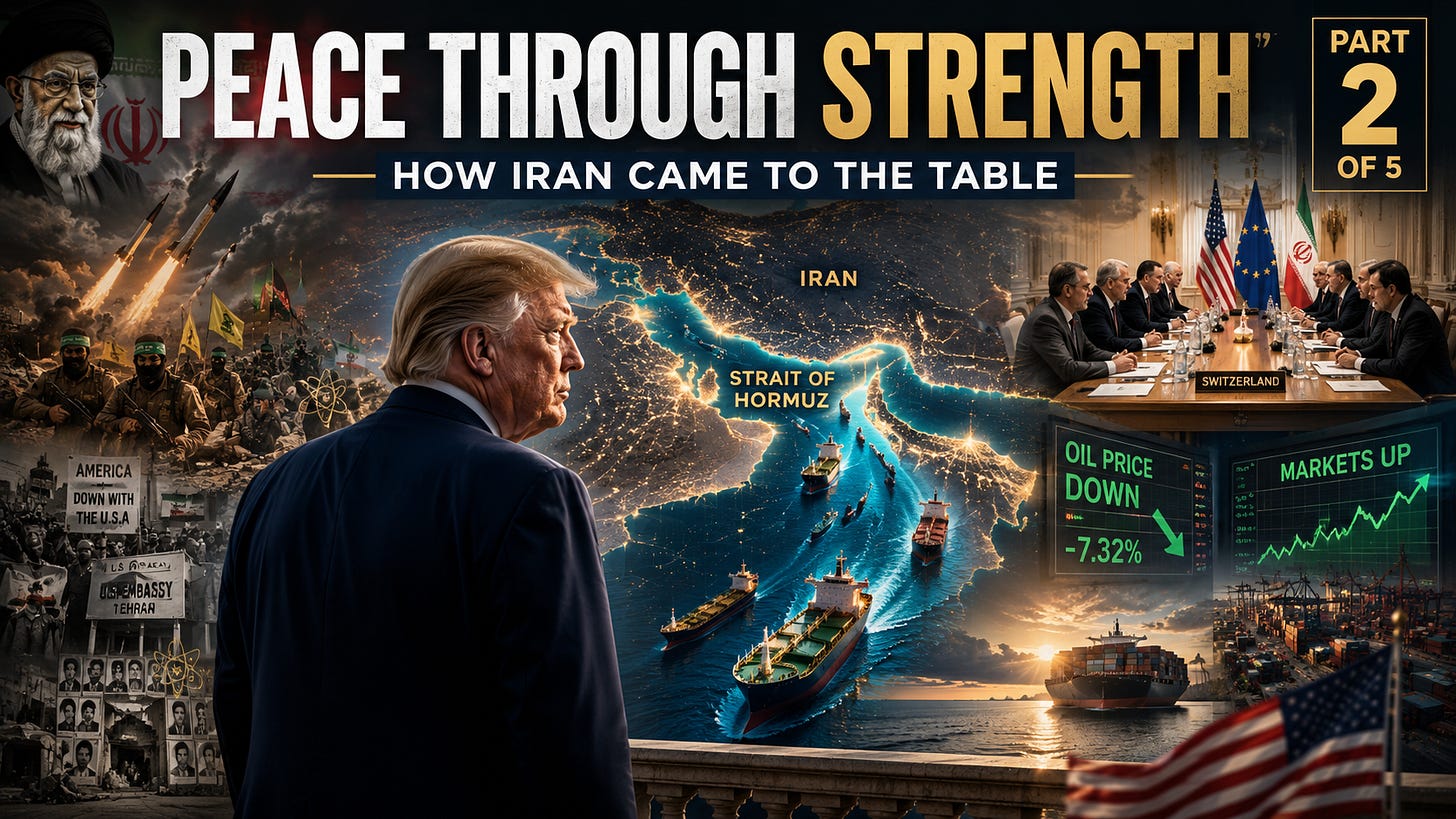
Reagan’s foreign policy likewise resonates here. The Reagan Doctrine supported freedom fighters against communist regimes. Trump is now empowering Arab nations to work alongside Israel to remove a terrorist regime—Hamas—and replace it with vetted, peace-oriented local governance. Reagan’s famous “peace through strength” mantra is alive and well.
Moreover, just as Reagan dealt firmly with Gorbachev while also projecting hope for a freer Eastern bloc, Trump’s plan offers conditional pathways toward Palestinian autonomy—but only if the Palestinian Authority (PA) completes comprehensive reforms, including the rejection of terror and anti-Israel incitement.
Strategic Wins: Regional Stability and American Strength
The Trump Doctrine in the Middle East, beginning with the Abraham Accords, continues here: aligning Sunni Arab powers with Israel against a common enemy, Iran. By including regional partners like Egypt, Jordan, and even Qatar and Türkiye—often wary of Israeli policy—Trump has isolated Hamas and positioned the U.S. as the indispensable broker of peace.
The conditional pathway to a Palestinian state, tied to performance and reform—not blind idealism—reflects constitutional prudence and geopolitical realism. This is no Carter-era naiveté. It’s a Reagan-style “trust but verify” approach.
By not forcing Israeli concessions up front, and by backing Israel’s security needs fully if the plan collapses, Trump maintains constitutional and moral clarity: American leadership does not mean neutrality between a democratic ally and a genocidal terror group. This is foreign policy that aligns with natural law, biblical justice, and American constitutional principles.
A Conservative Vision for Peace
President Trump’s peace plan is not just a deal—it’s a constitutional exercise in executive leadership that reinforces American strength and encourages peace through ordered liberty. The plan offers no rewards for terrorists, no blank checks for corrupt Palestinian leadership, and no U.S. military commitments. Instead, it builds on the Abraham Accords to deliver a future where Arab-Israeli partnership becomes the norm—not the exception.
From Washington’s caution to Monroe’s doctrine, from Reagan’s resolve to Trump’s boldness, this plan stands as a high-water mark of conservative diplomacy: morally sound, constitutionally rooted, and strategically smart.
And it sends a clear message: America leads best when it leads by strength and principle, not apology and appeasement.