Signing Day, the Next Sixty Days, and the Test of Trump’s Iran Peace Deal
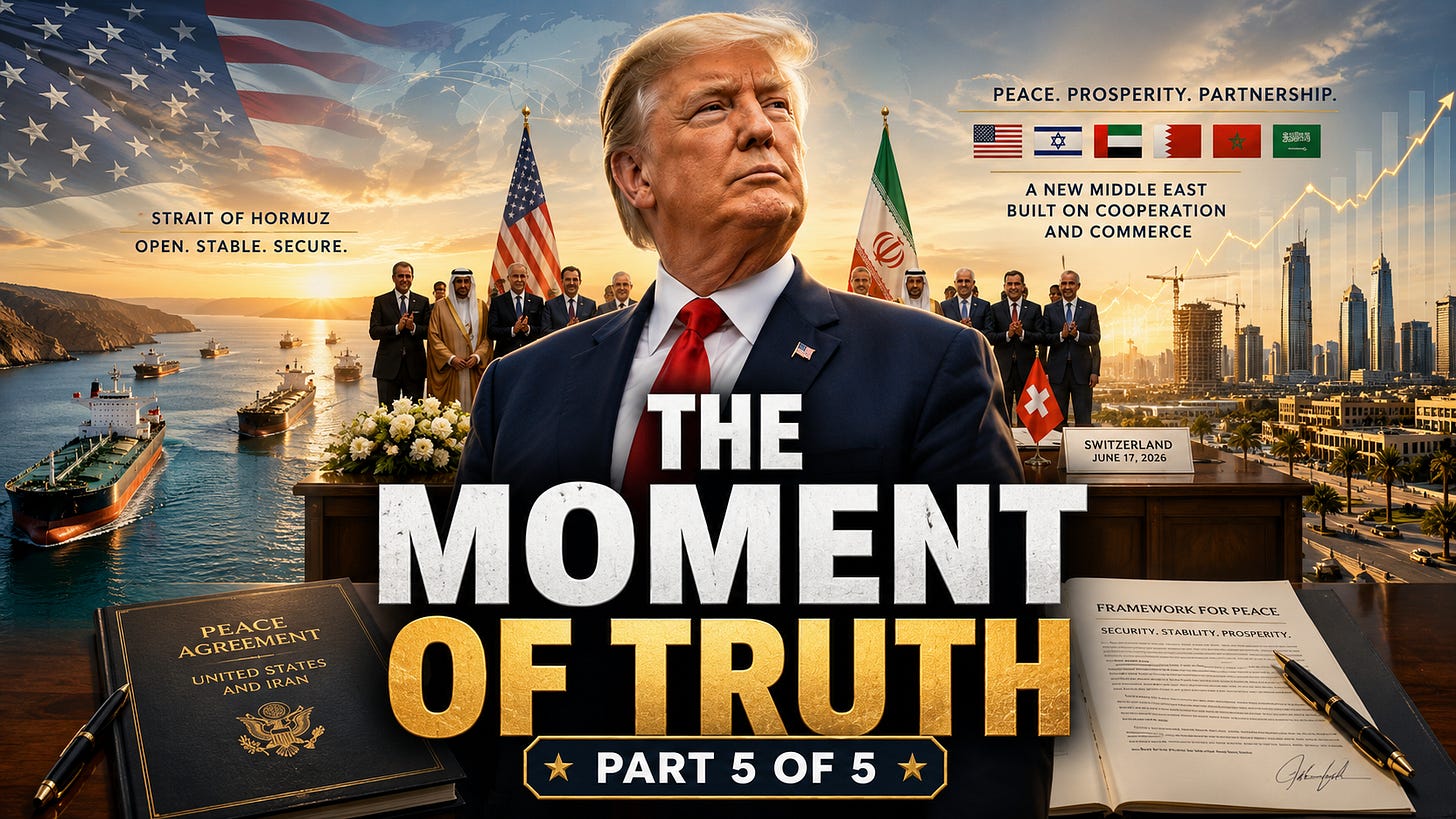
Editor’s Note: The United States and Iran announced a Memorandum of Understanding on June 14–15, 2026, with key provisions beginning implementation immediately, including the reopening of the Strait of Hormuz. At the time of this writing, the formal signing ceremony remains scheduled in Switzerland. This article examines the agreement as the framework moves from announcement to formalization.
Yesterday, in Part IV, we examined the global payoff of Trump’s Iran Peace Deal. We looked beyond Washington and Tehran and considered what this agreement could mean for oil markets, shipping lanes, inflation, China, the Abraham Accords, and the future of the Middle East.
Today, the series reaches its final question.
What happens now?
Because the signing ceremony is not the end of the story. It is the beginning of the test.
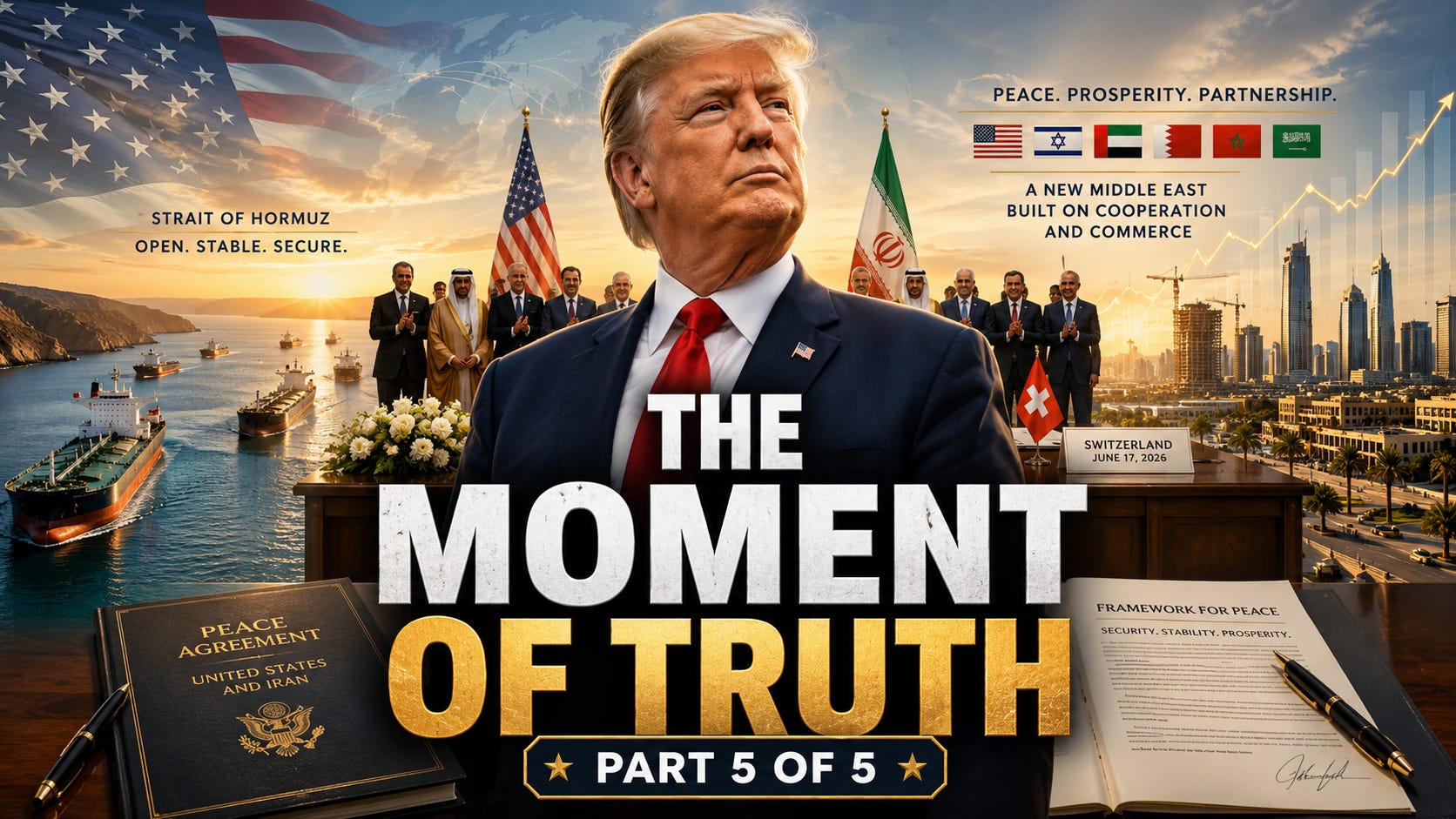
The Signature Matters, But It Is Not the Finish Line
In politics, signing ceremonies are designed to look final. Cameras gather. Leaders shake hands. Documents are placed on polished tables. Headlines describe history being made.
But serious agreements are not judged by the ceremony.
They are judged by what happens after the ceremony.
That is especially true with Iran. No serious America First observer should pretend that a signature suddenly erases decades of hostility, proxy warfare, nuclear ambition, threats against shipping routes, and attacks on American interests. The Iranian regime has not earned trust, and nothing about this agreement requires us to pretend otherwise.
That is the point we have made throughout this series.
This agreement is not built on trust.
It is built on leverage.
What Trump Already Achieved
The most important fact is that Iran came to the table after pressure was applied. The Strait of Hormuz began reopening. Markets responded. Oil prices moved lower. The immediate threat of a wider regional conflict appeared to ease.
Those are not small developments.
For decades, Iran treated Hormuz as its ultimate pressure point. The ability to threaten that narrow waterway gave Tehran leverage over oil markets, shipping routes, and global economic stability. That leverage shaped negotiations long before any formal deal was announced.
Now, Iran is negotiating after that leverage was challenged.
That is why we view this moment as significant. Not because Iran has suddenly become peaceful, but because America appears to have forced a different calculation.
The Next Sixty Days
The next sixty days will determine whether this framework becomes something durable or collapses under the weight of Iran’s history.
The major questions are obvious.
Will Iran comply with the terms?
Will nuclear negotiations produce meaningful limits?
Will inspections and verification be strong enough?
Will proxy funding actually be addressed?
Will sanctions relief, frozen assets, or future investment be tied to real compliance rather than promises?
Those questions matter because the worst possible version of diplomacy is diplomacy that rewards bad behavior without changing it. That is not peace through strength. That is appeasement.
But that is not what this appears to be.
The better way to understand this agreement is as a pressure-built opening. Trump did not begin by trusting Iran. He began by reducing Iran’s options. The next phase is about seeing whether Tehran is willing to accept the consequences of the new reality.
Why the Critics Still Miss the Bigger Picture
Critics will say this is only a framework.
They are not entirely wrong.
But that critique misses the strategic importance of the framework itself. A framework reached from weakness is dangerous. A framework reached after pressure, military setbacks, economic strain, and the loss of leverage is something different.
The question is not whether this document solves every problem today.
It does not.
The question is whether America is now negotiating from a stronger position than it was before the pressure campaign began.
We believe the answer is yes.
That is the difference between naïve diplomacy and America First diplomacy. Naïve diplomacy asks hostile regimes to behave better and hopes incentives will change them. America First diplomacy changes the cost of their behavior first, then negotiates from strength.
The Israel Question and the Regional Future
This agreement also exposes how shallow some of the anti-Israel explanations have been.
Israel has its own reasons for fearing Iran. That is obvious. Iran has funded and armed groups that threaten Israel directly, and no Israeli government can ignore that reality.
But America’s interests do not begin or end with Israel.
The United States has its own reasons to confront Iran: American troops, American bases, global shipping, energy markets, nuclear proliferation, terrorism, and the stability of a region that affects the world economy. Pretending this was all done “for Israel” ignores the direct American interests at stake.
The better view is that America and Israel faced overlapping threats for different reasons.
America was not acting as Israel’s proxy.
America was acting like America.
The Abraham Accords Vision
If this agreement holds, the longer-term significance may be what it unlocks.
The Abraham Accords were never just about diplomatic handshakes. They were about creating a new regional model built around trade, technology, investment, security cooperation, and prosperity.
Iran has been one of the biggest obstacles to that model.
Its proxies, threats, and revolutionary ideology kept much of the region locked in a defensive posture. Countries that wanted more trade, more investment, and more stability still had to calculate around Tehran’s ability to disrupt everything.
If Iran’s ability to intimidate its neighbors continues to decline, the Middle East could begin moving more seriously toward a different future.
Not perfect peace.
Not utopia.
But a region where making money becomes more attractive than making war.
What Success Looks Like
Success does not mean Iran becomes Switzerland overnight.
Success means Iran cannot obtain a nuclear weapon. Success means Hormuz remains open. Success means American troops and bases face reduced threats. Success means proxy networks lose funding and freedom of movement. Success means regional allies feel secure enough to pursue trade and normalization instead of constantly preparing for escalation.
Success also means America avoids another endless ground war.
That may be one of the most important parts of this entire story.
This was not Iraq 2.0. This was not Afghanistan 2.0. This was not nation-building, occupation, and vague promises about remaking a society from the outside.
This was pressure with a purpose.
The Real Verdict Comes Later
History rarely delivers its verdict on signing day.
The real verdict will come in the weeks and months ahead. It will come when Iran is forced to choose between compliance and consequences. It will come when nuclear terms are negotiated. It will come when markets decide whether stability is real or temporary. It will come when regional governments decide whether this is the moment to build something bigger.
That is why this moment should be treated with confidence, but not complacency.
Trump deserves credit for creating an opportunity that did not exist before. Iran deserves no blind trust. America deserves leadership that protects its interests without apologizing for its strength.
That is the balance.
The End of the Beginning
Across this five-part series, we have followed the story from announcement to strategy to criticism to global consequences and now to the formal test.
Part I asked what happened.
Part II explained why pressure worked.
Part III answered the skeptics.
Part IV examined the global payoff.
Part V brings us to the central conclusion.
Trump’s Iran Peace Deal matters because it may prove that America can still shape history when it acts with clarity, strength, and purpose. It matters because Iran was forced to negotiate from a weaker position. It matters because Hormuz reopened, markets responded, and the region may now have a chance to move toward something better.
The agreement may still fail.
Iran may still expose itself.
The next sixty days may still bring difficult decisions.
But one thing is already clear: America did not arrive at this moment by begging for peace. It arrived here by creating leverage, using strength, and forcing the world’s leading terror regime to face a new reality.
That is peace through strength.
And if it holds, it may be remembered as the beginning of a new chapter in the Middle East.
Part I: The Deal That Stopped the War
Part 2: Peace Through Strength
Part 3: The Critics and the Questions
Part 4: The Global Payoff