Series Introduction
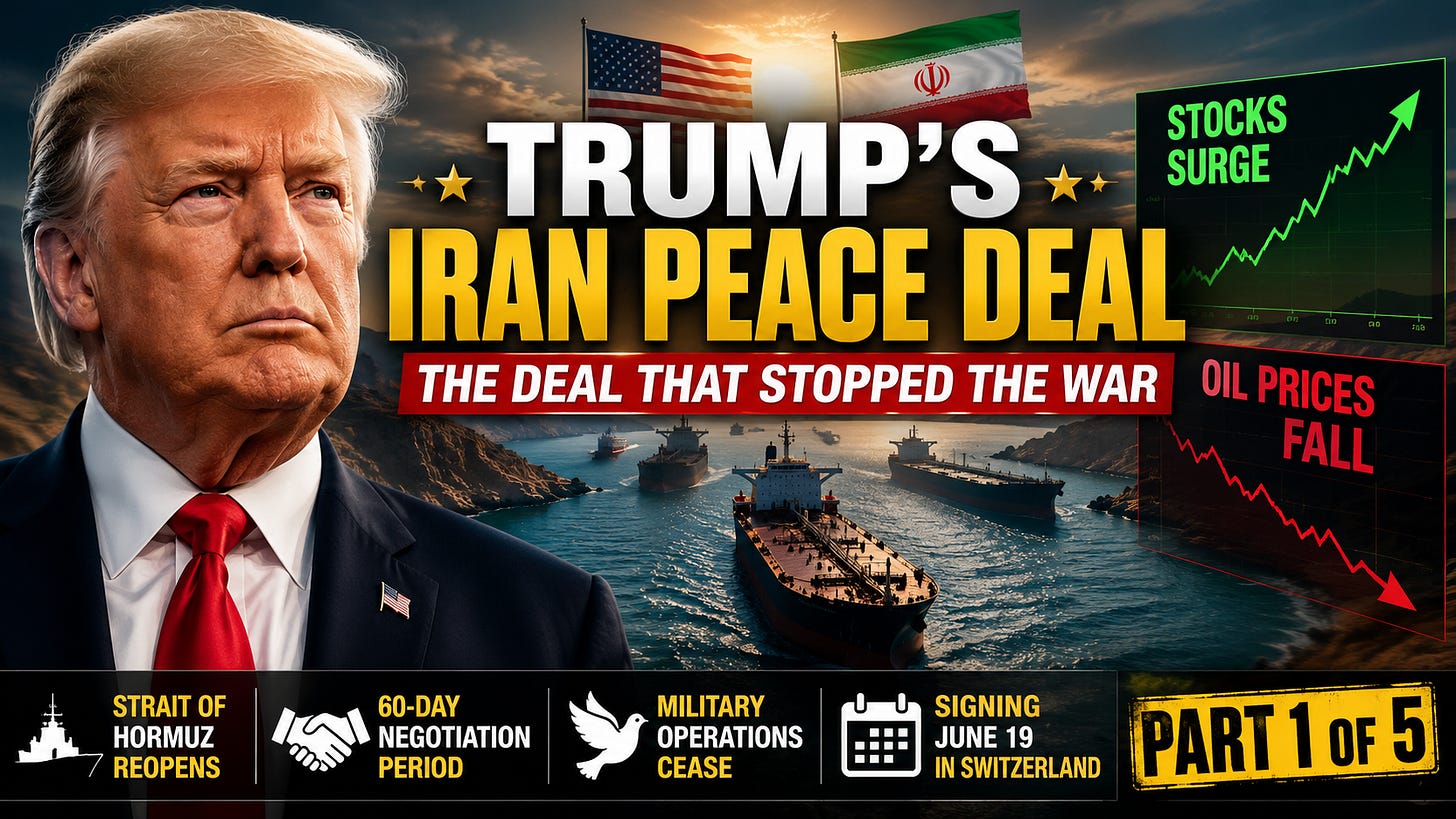
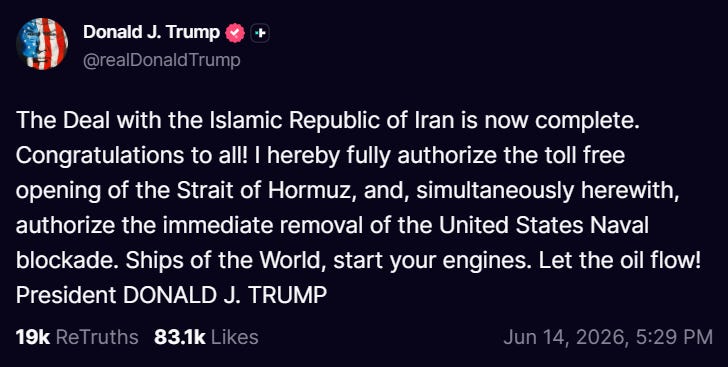
This week begins a five-part series on Trump’s Iran Peace Deal. This a developing story that could reshape the Middle East, global energy markets, and America’s role in the world.
The agreement is expected to be signed Friday, June 19, in Switzerland. At the center of it are the reopening of the Strait of Hormuz, the removal of maritime restrictions, a ceasefire framework, and a 60-day negotiation period over the issues still unresolved.
The central question is simple:
Did American pressure force Iran to the table and can this deal turn leverage into lasting peace?
Today, Part I begins with the deal itself.
Part I: The Deal That Stopped the War
The Week That Could Reshape the Middle East
Just days ago, the prospect of a wider conflict involving Iran appeared increasingly likely. Energy markets were nervous, military forces remained on high alert, and analysts debated whether the region was heading toward a prolonged confrontation.
Now, the story appears to be changing.
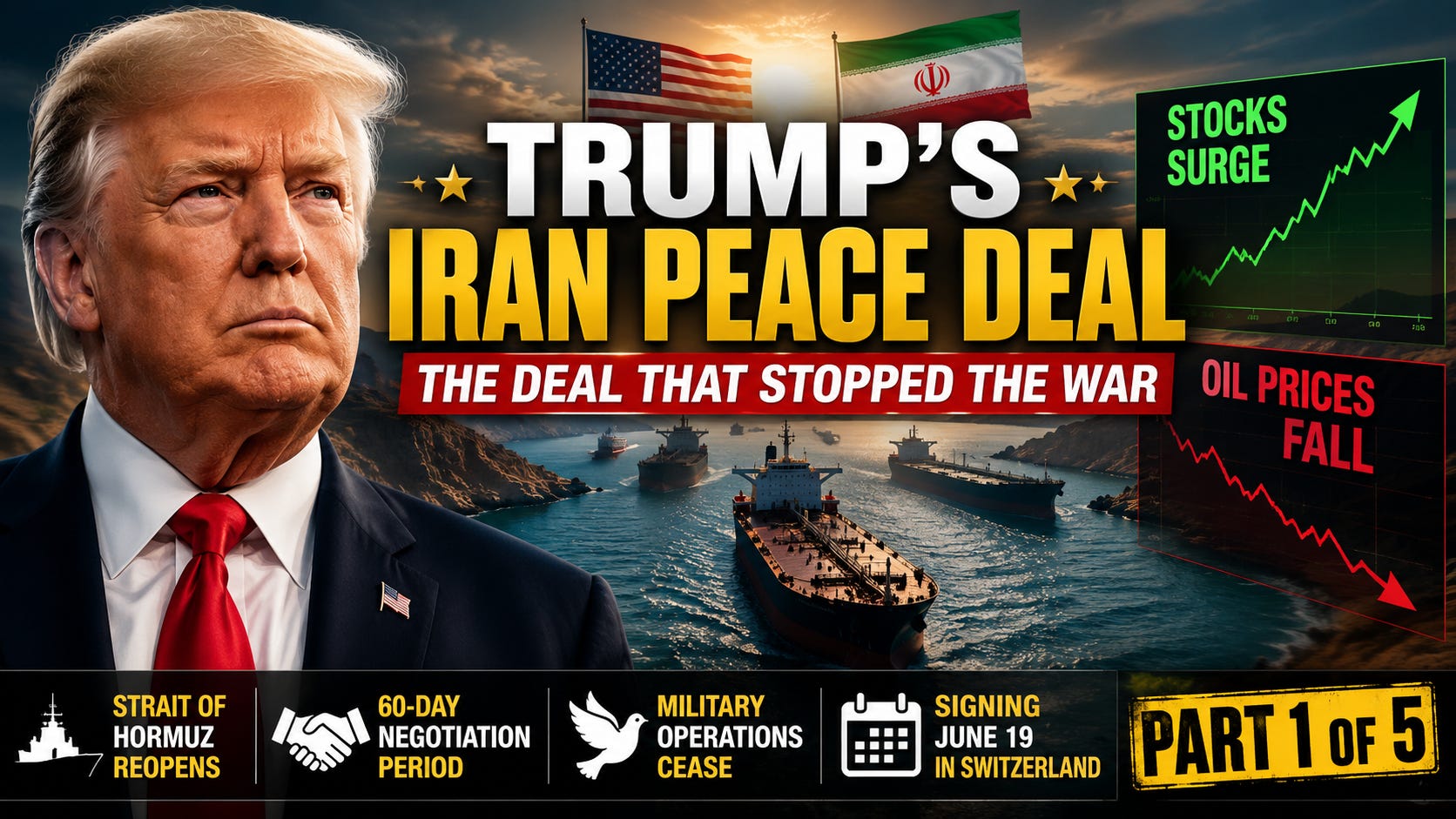
President Donald Trump announced that a peace agreement framework has been reached with Iran and that a formal signing ceremony is expected in Switzerland on June 19. Reports indicate the arrangement includes the reopening of the Strait of Hormuz, the removal of the U.S. naval blockade, a cessation of military operations, and a 60-day period for further negotiations on outstanding issues.
If finalized, the agreement could mark one of the most significant geopolitical developments of 2026.
But before anyone declares victory, it is worth understanding how we arrived at this moment.
Why the Strait of Hormuz Matters
For decades, the Strait of Hormuz has been one of the world’s most strategically important waterways.
A substantial percentage of globally traded oil moves through this narrow corridor connecting the Persian Gulf to international markets. Any disruption immediately affects energy prices, shipping costs, inflation expectations, and financial markets around the world.
That reality has given the region outsized importance in global affairs.
For years, Iran’s ability to threaten Hormuz has been one of its most important forms of leverage. Even the possibility of disruption can unsettle markets, rattle governments, and force world leaders to calculate the economic cost of escalation.
When tensions escalated, investors feared the possibility of prolonged disruptions. Markets reacted accordingly.
Now, with reports indicating the waterway will remain open and commercial traffic will resume, investors are beginning to price in a different future.
The Announcement
According to statements released over the weekend, the framework includes several major components:
-
Reopening of the Strait of Hormuz
-
Suspension of military operations
-
Removal of maritime restrictions
-
Removal of the U.S. naval blockade
-
A 60-day negotiation period
-
Formal signing scheduled for June 19 in Switzerland
Supporters of the agreement see this as evidence that sustained economic and military pressure achieved what decades of conventional diplomacy could not. In their view, Iran has effectively conceded on one of its most important strategic leverage points: the Strait of Hormuz. For decades, the mere threat of disrupting one of the world’s most critical energy corridors influenced negotiations, sanctions policy, and regional security calculations. By agreeing to reopen the waterway and enter a formal negotiation process, Iran is signaling a willingness to move away from confrontation and toward accommodation. Supporters argue that this represents a significant strategic shift and a tangible demonstration of what President Trump has often described as “peace through strength.”
They further point to the broader context surrounding the agreement. Following months of economic pressure, military setbacks, declining oil revenues, and increasing internal strain, Iran entered negotiations from a position many analysts believe is weaker than at any point in recent decades. The reopening of Hormuz, the cessation of military operations, and the launch of a 60-day negotiating framework are viewed by supporters as early indicators that American leverage may have succeeded in creating an opportunity for a more stable Middle East, safer global shipping routes, lower energy costs, and a diplomatic path forward that few thought possible just weeks ago.
The Markets Vote First
One of the first places where the impact appeared was not in Washington or Tehran but on trading floors.
Oil prices moved lower while equity markets responded positively to the prospect of reduced regional instability. Investors generally reward predictability, and the possibility of avoiding a wider war immediately changed expectations.
Whether those expectations prove correct will depend on what happens next.

The Bigger Question
The real story may not be the agreement itself.
The real story may be what the agreement reveals.
After years of confrontation, sanctions, proxy conflicts, military escalation, and threats surrounding one of the world’s most important shipping lanes, both sides appear willing to test whether strategic pressure can be converted into diplomatic outcomes.
That question will define the next sixty days.
On Friday, leaders are expected to sign the agreement.
But the signatures are only the beginning.
Tomorrow, we’ll examine why supporters of the deal believe this may represent one of the most significant American foreign-policy victories in decades and why they see it as peace through strength in real time.