The Political Earthquake No One Saw Coming
As the country fixates on 2026 midterm polling and the presidential showdown, a bombshell is quietly ticking inside the Supreme Court chambers. The case (Louisiana v. Robinson (formerly Clay)) could become the most transformative constitutional ruling in a generation. Why?
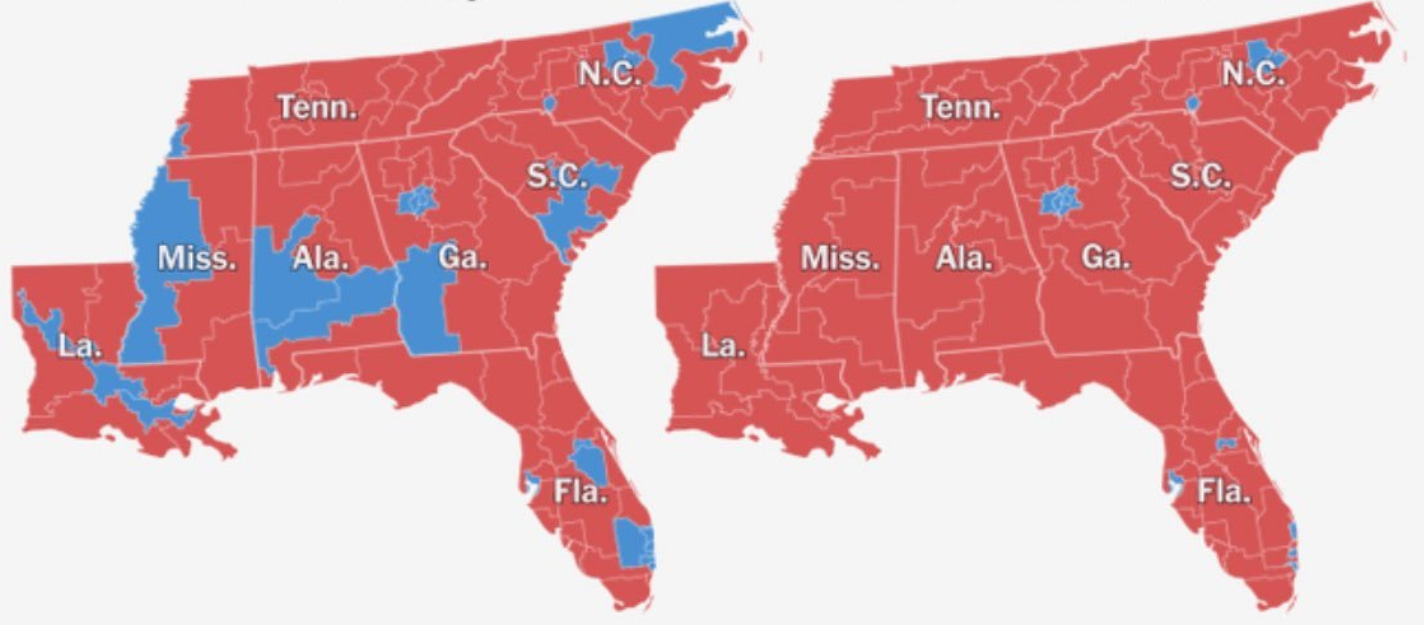
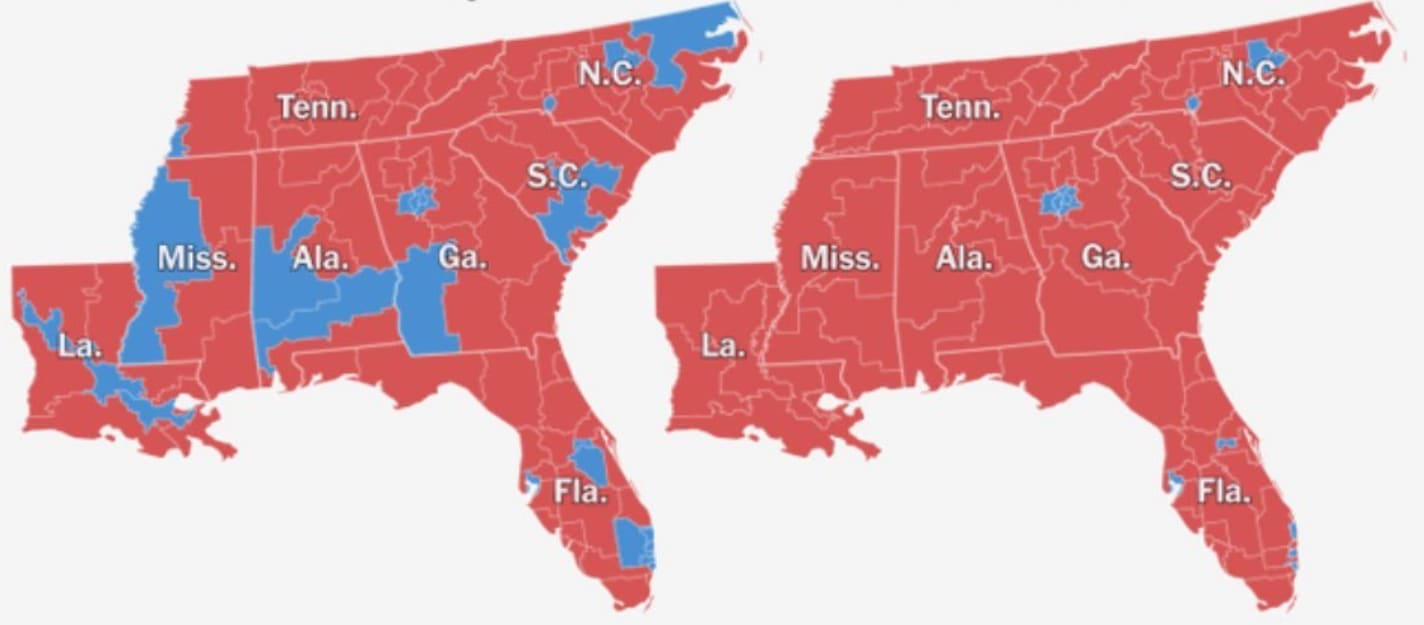
Because it might overturn the very racial gerrymandering framework that gave Democrats up to 30 seats in Congress. These are seats that were never won on merit, but engineered through race-based redistricting quotas imposed by Section 2 of the Voting Rights Act (VRA).
And if that happens? Nineteen Democrat seats could vanish overnight.
The Origin of the Scheme: How Section 2 Was Weaponized
Let’s rewind.
The Voting Rights Act of 1965, a landmark civil rights statute meant to ensure fair access to the ballot, took a radical turn in the 1980s. With the Supreme Court’s decision in Thornburg v. Gingles (1986), Section 2 of the VRA was reinterpreted to require states to create majority-minority districts (congressional districts drawn predominantly along racial lines).
While framed as “anti-discrimination,” this effectively segregated voters by race and ensured the perpetual election of Democrat candidates in minority-heavy areas.
In practice, this was a system of racial gerrymandering dressed up in civil rights rhetoric. This deliberately excluded white voters and using courts to mandate Democrat-safe seats. Over time, these judicially imposed maps handed Democrats an estimated 30-seat artificial advantage.
Enter SCOTUS: The Reckoning Begins
Now, the Supreme Court has agreed to take up a case that doesn’t just challenge Louisiana’s map but the entire premise of majority-minority districts under Section 2.
The key question on the table:
Is racial gerrymandering, even in the name of “minority representation,” constitutional at all?
If the court rules broadly (and legal experts say it likely will) dozens of seats drawn solely based on race could be deemed unconstitutional.
This includes:
-
At least 19 seats in red states like Alabama, Mississippi, Louisiana, and South Carolina
-
Up to 30% of the Congressional Black Caucus
-
Nearly 11% of the Hispanic Caucus
-
Most “guaranteed” Democrat districts across the South and Midwest
The Math: Over 30 Seats Could Flip Without Winning a Single Swing District
Here’s where the numbers get deadly for Democrats:
-
SCOTUS ruling alone: Net Republican gain of 19 seats
-
Mid-decade redistricting (already in motion): Another 12–15 GOP pickups
-
Texas: +5 GOP seats
-
Florida: +4 GOP seats
-
North Carolina: +3 GOP seats
-
Missouri, Ohio, Indiana, Kansas: +1 to +3 each
-
Total net shift: +30 to +34 Republican seats (and not a single one of them requires flipping a swing district).
Let that sink in.
This isn’t a wave. It’s a structural realignment.
Democrats’ Nightmare Scenario: Permanent Minority Status
With the ruling expected in January or February 2026, red states will have time to redraw maps before the election. And the timing couldn’t be worse for Democrats. They’re already on defense:
-
Blue-state population loss is triggering apportionment cuts
-
Red-state growth is shifting congressional weight
-
Mass illegal immigration reversals are shrinking urban district numbers
-
Senate math is already locked in red’s favor—now the House may follow
Best-case scenario for Democrats after this decision? A tied House.
Worst case? A GOP supermajority that doesn’t rely on swing districts or cross-party coalitions (i.e. just math and constitutional clarity).
The End of the Era of Engineered Power
Section 2, once the crown jewel of Democrat lawfare, may soon be struck down by the very Constitution it claimed to defend.
Thanks to a conservative SCOTUS majority forged during Donald Trump’s first term, we are now witnessing the dismantling of a racially discriminatory redistricting regime that tilted the playing field for over 40 years.
If the court rules as expected, this won’t just be a legal shift, it’ll be a tectonic political one.
the Conservative TAKE…
The left knows what’s coming. Their hysteria over Louisiana v. Robinson isn’t about protecting minority rights. It’s about losing artificially engineered power they thought was permanent.
And they’re right to be scared.
Because this ruling (combined with mid-decade redistricting and population shifts) won’t just hurt Democrats in 2026.
It may bury them.