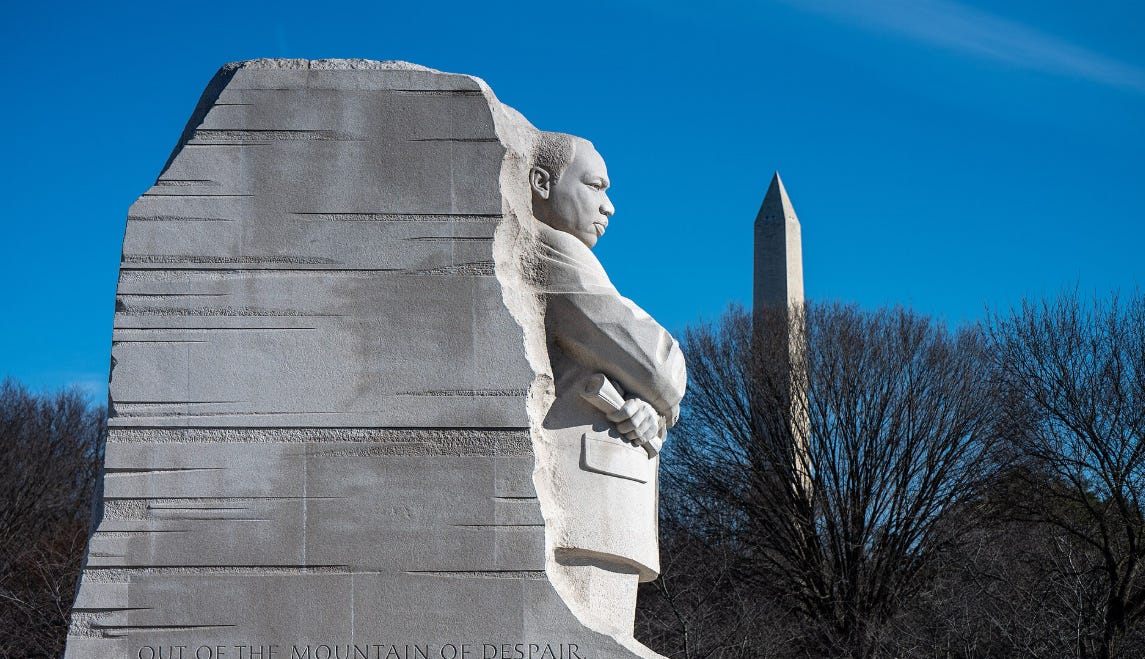
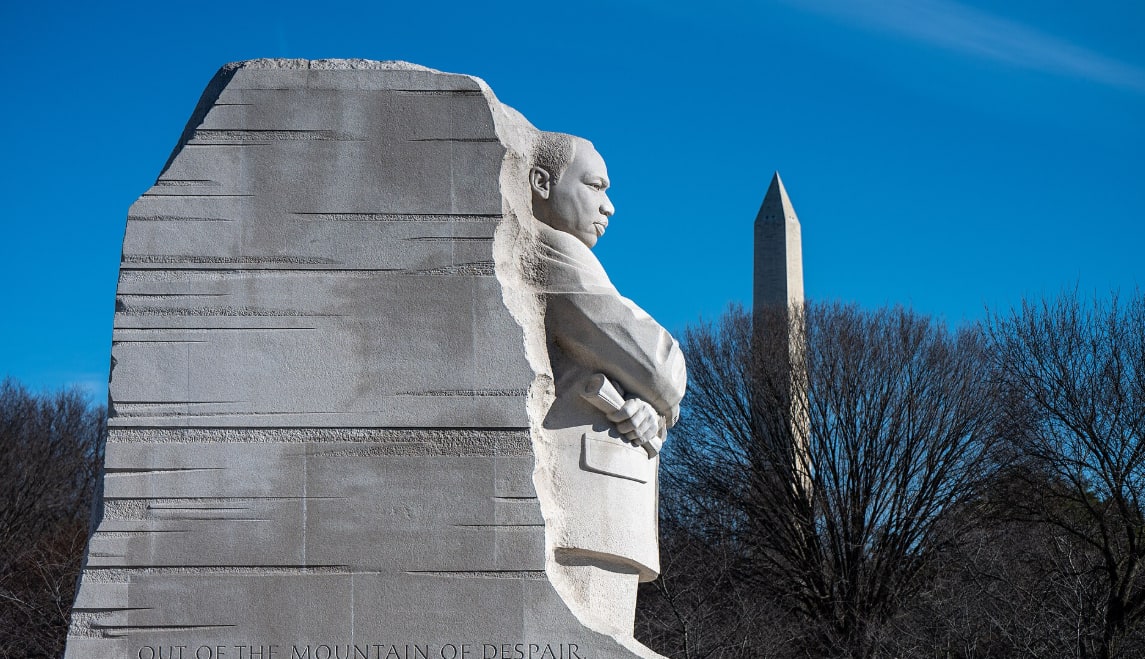
In light of recent revelations, including the release of previously hidden files and information on Martin Luther King Jr., a troubling picture has emerged. For decades, King has been celebrated as a hero of the Civil Rights Movement, but many are now asking: How did such a controversial figure rise to such prominence? What events, influences, and ideological forces propelled him into the spotlight? These are important questions, especially considering the significant influence King’s legacy still holds in American culture, institutions, and politics. This article serves as a brief summary of key points about Martin Luther King Jr.’s life and legacy that we will explore in greater detail over the coming weeks. This is a hugely important topic for America, as so many of our institutions are built upon the reverence of King. If we value God, family, and traditional American values, it is essential to reconsider the way we view him.
1. King Was a Fake Preacher
Perhaps the most egregious aspect of Martin Luther King Jr.’s legacy is that he was never truly a Christian preacher. King denied core Christian doctrines such as the deity of Christ, the virgin birth, and the resurrection. These are foundational truths of the Christian faith, yet King never once in his speeches or writings preached the Gospel of Jesus Christ. Instead, he promoted a “social gospel”—a theology focused on social justice and societal reform rather than spiritual salvation. This makes his role as a minister of the Christian faith deeply questionable, as his messages lacked the central focus on repentance, redemption, and the transformative power of Christ.

2. His Doctorate Was Plagiarized
Martin Luther King Jr.’s academic integrity has also come into question. It was discovered that a significant portion of his doctoral dissertation at Boston University was plagiarized. This is not a minor issue but a serious violation of academic ethics. Despite the evidence, Boston University chose not to revoke his doctorate, likely due to the political ramifications of removing a figure so central to the Civil Rights Movement. This decision further illustrates how King’s image and status were preserved at all costs, even when it meant ignoring the truth.

3. King Played a Role in Promoting Abortion
King’s legacy is further complicated by his ties to the abortion movement. In 1965, he became the first recipient of the Margaret Sanger Award, named after the founder of Planned Parenthood, an avowed eugenicist who sought to control the population of minorities. By accepting this award, King indirectly linked himself to the abortion movement, which has had devastating effects, particularly within black communities, leading to millions of unborn children being killed. This association casts a dark shadow over King’s public image, especially considering his role in championing the rights of black Americans.

4. He Was Involved in Scandalous Affairs
New information about King’s personal life has also raised questions about his character. Despite his public persona as a moral leader, he was reportedly involved in numerous extramarital affairs, including sexual orgies. While some may argue that personal misconduct shouldn’t overshadow his public work, such behavior undermines his credibility as a moral authority and calls into question the integrity of his leadership.
5. King Was Tied to Communist Sympathizers
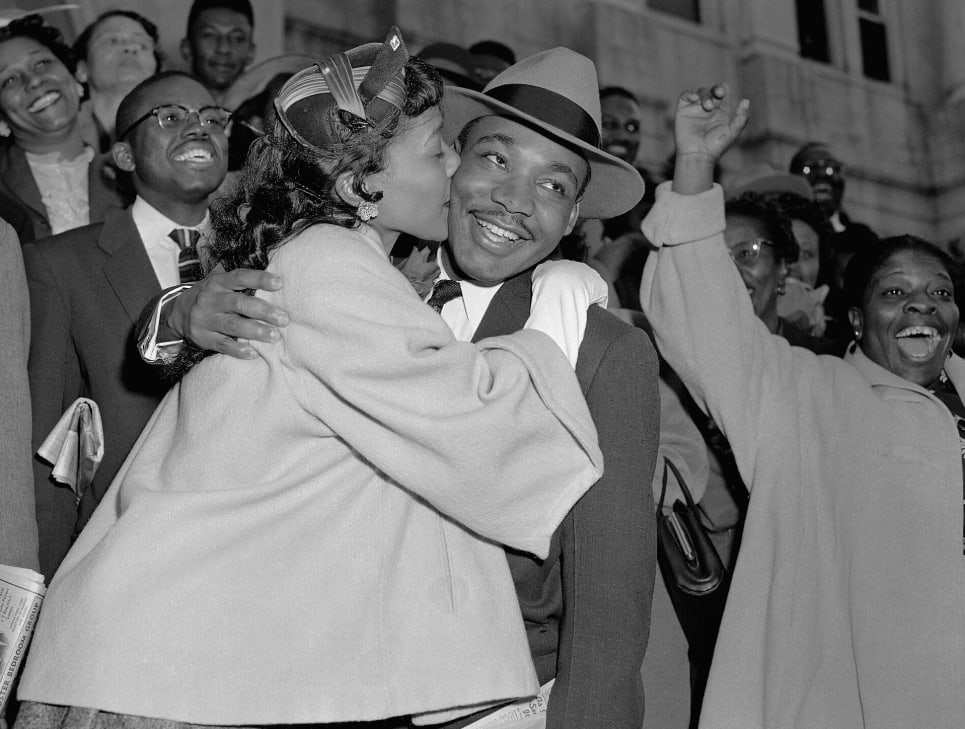
King’s political affiliations also raise concerns, especially his connections to communist sympathizers. Files released on King suggest he had ties to individuals and groups with communist leanings, including figures like Gus Hall, head of the U.S. Communist Party. These associations raise important questions about whether King’s advocacy for racial equality was motivated by a genuine desire to improve the lives of black Americans or whether he was manipulated as part of a broader ideological agenda.
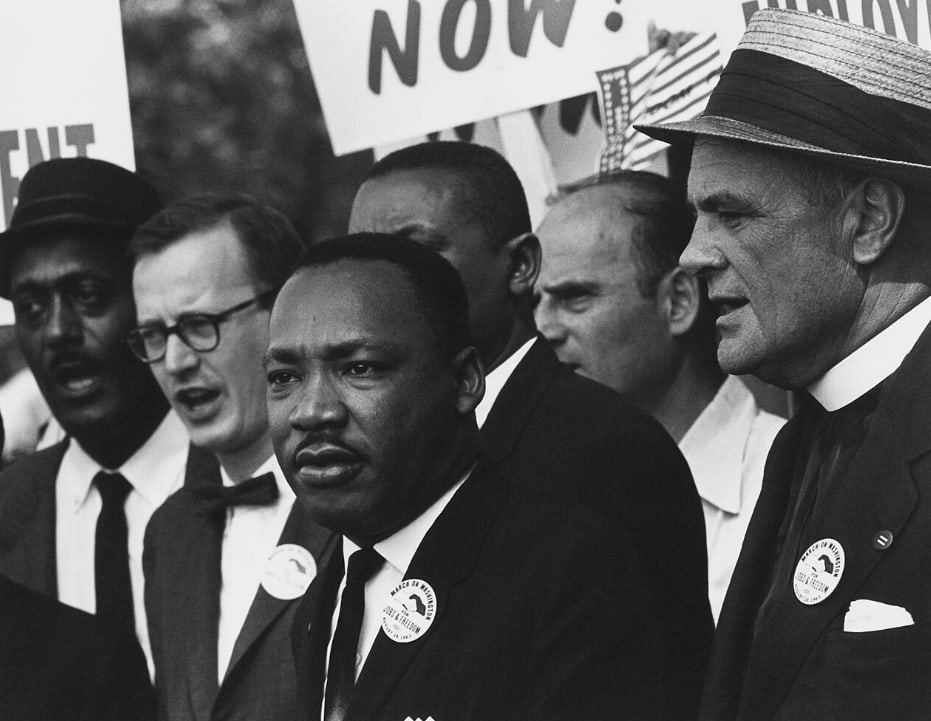
6. His Approach to Civil Rights Was Unbiblical
King’s philosophy of nonviolent resistance and his call for integration into white spaces were rooted in the idea of seeking approval from society rather than from God. This approach, which is in direct contrast to biblical teachings, focused on gaining acceptance from a society that had long oppressed black people, rather than promoting self-respect, strength, and dignity rooted in Christian faith. The Bible teaches us to seek God’s approval, not man’s, and King’s nonviolent tactics often placed greater emphasis on external validation than on spiritual redemption.
7. The Civil Rights Movement Was a Cold War Strategy
Rather than being an organic movement purely motivated by racial justice, the Civil Rights Movement was also shaped by Cold War politics. According to author Mary Dudziak, the movement was strategically used to improve America’s image abroad, particularly in the eyes of non-aligned nations during the Cold War. This political maneuvering raises questions about the true motivations behind the movement and whether racial justice was the primary concern or whether the Cold War was the driving force behind many of its actions.
8. King’s Legacy Has Led to the Destruction of the Black Family
One of the unintended consequences of King’s leadership and the policies that followed the Civil Rights Movement is the deterioration of the black family. Under King’s vision, the expansion of the welfare state and the promotion of government dependency, rather than self-reliance, began to erode the nuclear family structure. This shift has contributed to cycles of poverty, crime, and dependency, undermining the strong family units that were a key source of strength for black Americans from the 1940s to the 1960s.
9. King’s Legacy of Violence
Although King preached nonviolence, the legacy of his movement has contributed to widespread civil unrest and violence. The Civil Rights Movement often led to chaos and destruction, and groups that followed King’s model continue to foster divisiveness and resentment. King’s peaceful message, while admirable in theory, inadvertently paved the way for societal polarization and violent confrontations in the years that followed.

10. King Was Part of a Marxist Agenda
Finally, Martin Luther King Jr. was used by left-wing elites and Marxists to advance a political agenda that served their ideological goals, not the welfare of black Americans. His image was promoted by the media and the government to ensure black Americans continued to support Marxist ideologies, particularly within the Democratic Party. As a result, King’s actions and words continue to serve the goals of these ideologies to this day, keeping the black community locked into a cycle of left-wing dependence and political manipulation.
the Conservative TAKE…
The question is not whether Martin Luther King Jr. was immoral or a Marxist plant; the real question is how he rose to such prominence in the first place. Why did King, a preacher who had significant disagreements with other influential black leaders, gain such widespread influence? One key moment was his split from Dr. J. H. Jackson, leader of the National Baptist Convention, the largest black church denomination in the U.S. Jackson held more traditional, conservative views, while King’s break from him led to the creation of his own ministry within a more politically active and liberal framework. This shift sheds light on the political forces that supported King’s rise.
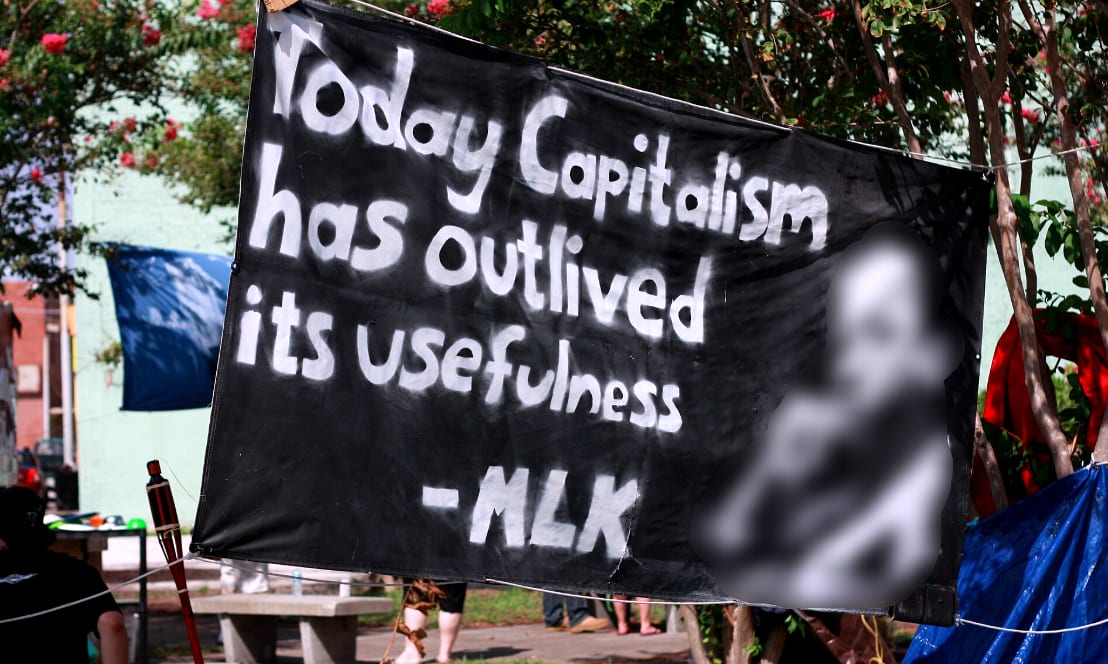
King’s influence wasn’t only about his personal charisma or preaching. It was shaped by broader political and ideological currents, with his civil rights platform combining social justice demands and critiques of capitalism. These are ideas that aligned with the growing Marxist influence in the 1960s Civil Rights Movement. His endorsement of democratic socialism and calls for economic reform resonated with Marxist-aligned civil rights organizations. Key figures like Bayard Rustin and A. Philip Randolph, along with groups like the Civil Rights Congress, which had communist affiliations, played roles in linking racial justice with international socialist causes.
The manipulation of King’s image also contributed to his prominence. Despite personal scandals and Marxist ties, King was strategically promoted as a hero of nonviolence and Christian love, obscuring the contradictions in his character and public persona. This image, carefully curated by powerful figures, was used to steer black Americans toward ideologies that ultimately harmed the community, undermining traditional values and contributing to long-term negative impacts on family structures, economic stability, and cultural integrity.
From the 1940s to the 1960s, African Americans were making significant strides in education, employment, and political participation, all while maintaining strong family structures. The black nuclear family was central to these gains, with families working together to provide stability and support for future generations. However, as we reflect on King’s legacy and the Civil Rights Movement, we must ask: Why was he placed at the forefront of this movement, and what events or ideological shifts made this possible? In the coming weeks, we will explore these critical points in greater detail. We will be examining King’s controversial beliefs, his academic and personal life, his ties to Marxism, and the impact of his leadership on the black family. Stay tuned as we delve deeper into these issues and explore how the shifts in leadership and ideology contributed to the breakdown of the black family and the rise of dependency.
Indexed Sources:
1. King Was a Fake Preacher
-
Martin Luther King Jr.’s Denial of Key Christian Doctrines: In various speeches and writings, King expressed a belief in a “historical Jesus,” not the divine Christ of Christianity. These views are referenced in books like The Autobiography of Martin Luther King Jr., edited by Clayborne Carson, and in biographical accounts of King’s personal beliefs, such as David Garrow’s Bearing the Cross: Martin Luther King, Jr., and the Southern Christian Leadership Conference.
What the Bible Says About Denying the Deity of Christ:
-
Denial of Christ’s Deity is Antichrist:
“Who is a liar but he that denieth that Jesus is the Christ? He is antichrist, that denieth the Father and the Son.”
— 1 John 2:22
-
Rejecting Jesus as God leads to spiritual peril:
“That if thou shalt confess with thy mouth the Lord Jesus, and shalt believe in thine heart that God hath raised him from the dead, thou shalt be saved.”
— Romans 10:9
-
Christ is God revealed in the flesh:
“And without controversy great is the mystery of godliness: God was manifest in the flesh…”
— 1 Timothy 3:16
-
Denial of Jesus’ identity as the “I AM” results in dying in sin:
“I said therefore unto you, that ye shall die in your sins: for if ye believe not that I am he, ye shall die in your sins.”
— John 8:24
-
Thomas’ confession acknowledges Jesus as both Lord and God:
“And Thomas answered and said unto him, My Lord and my God.”
— John 20:28
2. His Doctorate Was Plagiarized
-
Source 1: The Papers of Martin Luther King Jr., Volume I: Called to Serve by Clayborne Carson
This collection of King’s papers includes discussions of his academic work. The controversy regarding King’s plagiarism of his doctoral dissertation at Boston University is a well-documented issue in academic and biographical studies.-
Source 2: Bearing the Cross: Martin Luther King, Jr., and the Southern Christian Leadership Conference by David Garrow
David Garrow’s biography provides an in-depth account of the plagiarism controversy, including how parts of King’s dissertation were found to be heavily plagiarized from other sources. This was discovered years after King’s death but remains a notable part of his academic history.
-
3. King Played a Role in Promoting Abortion
-
Source 1: The Life and Legacy of Martin Luther King Jr. edited by Clayborne Carson
This collection discusses King’s association with controversial figures such as Margaret Sanger. King received the Margaret Sanger Award in 1966 for his work in promoting social justice, which has been linked to Planned Parenthood’s controversial history with eugenics.-
Source 2: The Margaret Sanger Award: An Inside Look at King’s Connection to Planned Parenthood (Planned Parenthood archives)
Official records and articles from Planned Parenthood, including historical analysis of the Sanger Award, reveal King’s connection to the abortion movement. This is also documented in King’s acceptance of the award, which has been analyzed by various critics as promoting ideologies aligned with Sanger’s eugenic beliefs.
-
4. He Was Involved in Scandalous Affairs
-
Source 1: FBI Tapes (Freedom of Information Act)
The FBI’s surveillance of King, particularly by J. Edgar Hoover, included wiretaps of King’s personal life. These tapes, which have been partially declassified, reveal evidence of his extramarital affairs and the extent to which the FBI sought to expose them.-
Source 2: Bearing the Cross: Martin Luther King Jr. and the Southern Christian Leadership Conference by David Garrow
Garrow’s biography of King includes extensive details about King’s personal life, including accounts of multiple extramarital affairs. The book is often cited as one of the most comprehensive studies on King’s life, addressing both his public and private actions.
-
5. King Was Tied to Communist Sympathizers
-
Source 1: The FBI and Martin Luther King Jr.: From “Solo” to Memphis by David Garrow
This book examines the FBI’s surveillance of King and his connections to communist sympathizers, including individuals like Stanley Levison, who was tied to the Communist Party USA. The book details King’s associations with communist-affiliated figures and the FBI’s concerns over these ties.-
Source 2: The Cold War Civil Rights Movement: Race and the Image of American Democracy by Mary Dudziak
Dudziak’s analysis argues that the Cold War context influenced the Civil Rights Movement, including King’s connections to individuals with left-wing ideologies. While King himself may not have been a communist, his ties to leftist groups are documented and played a role in his rise.
-
6. His Approach to Civil Rights Was Unbiblical
-
Source 1: Strength to Love by Martin Luther King Jr.
In this book of sermons, King discusses his philosophy of nonviolent resistance and social justice. While these sermons are rooted in Christian principles, many critics argue that King’s focus on social justice and societal reform often overshadowed the core gospel message of repentance and spiritual salvation.-
Source 2: The Trumpet of Conscience by Martin Luther King Jr.
King’s collection of speeches includes his calls for societal reform but also highlights his tendency to prioritize social issues over traditional Christian salvation messages. Critics have pointed to this as evidence of a shift away from orthodox Christian teachings.
-
7. The Civil Rights Movement Was a Cold War Strategy
-
Source: Cold War Civil Rights: Race and the Image of American Democracy by Mary Dudziak
This academic book argues that the Civil Rights Movement was heavily influenced by Cold War politics, with the U.S. government pushing civil rights reforms to improve its image on the global stage, especially in the context of competing with the Soviet Union.
8. King’s Legacy Has Led to the Destruction of the Black Family
-
Source 1: Origins of Post-1960 Black Family Structure by Gerald David Jaynes
Published in the Du Bois Review: Social Science Research on Race, this paper examines how social structures, rather than cultural deficiencies, influenced the behaviors and family formations of low-income Black communities. Jaynes argues that distinct experiences of discrimination in urban and rural Black enclaves shaped child socialization and family structures differently across regions. This work challenges the narrative that the breakdown of the Black family was solely due to welfare dependency or deindustrialization, offering a nuanced perspective on the factors contributing to changes in Black family dynamics post-1960.
-
Source 2: A 100-Year Review of Research on Black Families by Child Trends
This comprehensive report by Child Trends provides an overview of social science research on Black families from 1920 to 2019. It highlights key findings and shifts in understanding regarding Black family structures, including the impact of historical, social, and economic factors. The review offers insights into how research has evolved over the decades and its implications for policies affecting Black families.
-
9. King’s Legacy of Violence
-
Source 1: FBI Tapes (Freedom of Information Act)
The FBI’s wiretaps of King’s inner circle and the social unrest that followed his public advocacy often involved violent clashes. These tapes document the increasing tensions within the Civil Rights Movement, and their aftermath contributed to civil unrest that lasted for decades.-
Source 2: Eyes Off the Prize: The United Nations and the African American Struggle for Human Rights, 1944-1955 by Carol Anderson
Anderson’s work analyzes how the Civil Rights Movement’s focus on protest sometimes led to violence and division, especially as movements within the black community grew more radical after King’s assassination.
-
10. King Was Part of a Marxist Agenda
-
Source 1: Was Martin Luther King a Marxist? by Adam Fairclough
This scholarly article, published in the Journal of American History, examines the extent to which Martin Luther King Jr. embraced Marxist ideas. Fairclough analyzes King’s speeches, writings, and associations to assess his ideological leanings. The article provides a nuanced view of King’s political philosophy, acknowledging his advocacy for social justice while exploring his critiques of capitalism and support for economic reforms.-
Source 2: Martin Luther King Jr. and the Socialist Within by Stephen Joseph Scott
Published on Black Agenda Report, this article delves into King’s alignment with socialist principles. Scott argues that King was a socialist at his core, highlighting his support for economic justice, cooperative principles, and collectivist values. The piece examines King’s public statements and actions to illustrate his commitment to socialist ideals.
-