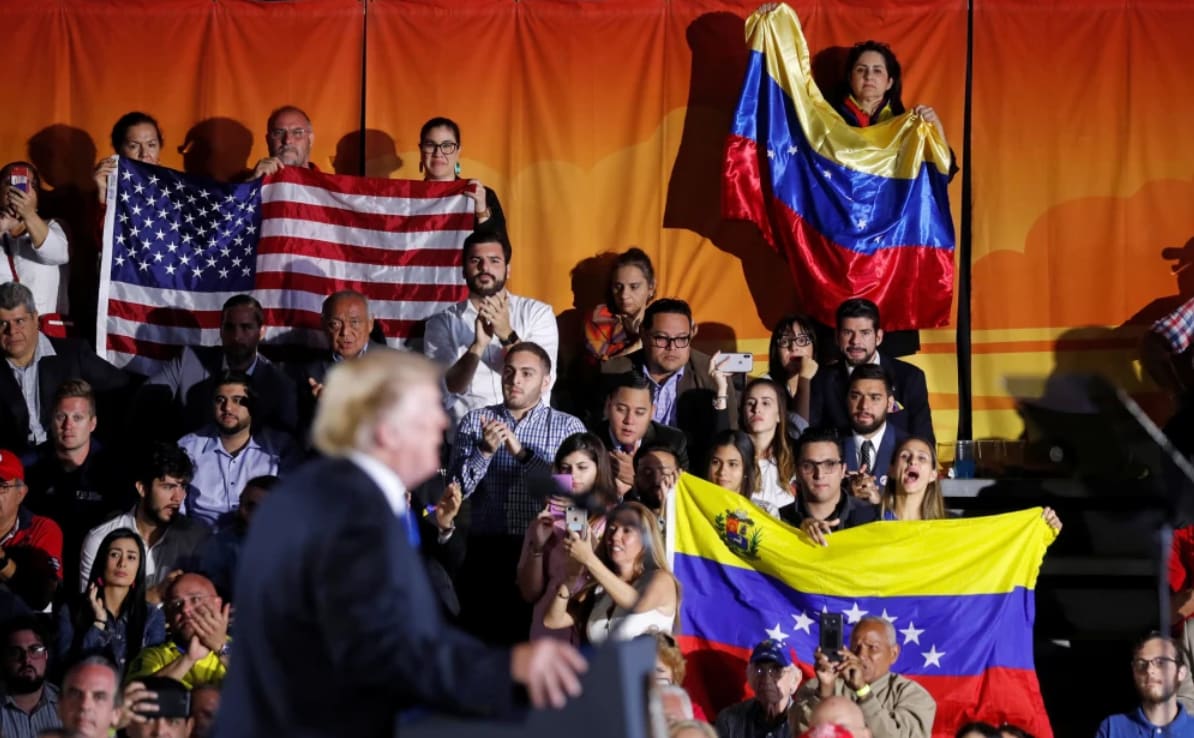
WASHINGTON, Jan. 4, 2026: In a swift and precise operation early Saturday, U.S. special forces captured Venezuelan President Nicolás Maduro and his wife, Cilia Flores, marking a significant escalation in America’s approach to regional security. President Donald J. Trump announced the success of the mission, dubbed Operation Absolute Resolve, which involved elite units breaching Maduro’s fortified compound in Caracas amid airstrikes and helicopter insertions. Maduro, long accused of leading a narco-terrorism network, is now en route to New York to face federal charges.
The raid, executed with no reported American casualties, unfolded around 2 a.m. local time in Caracas. Explosions and low-flying aircraft disrupted the night as Delta Force operators, supported by the 160th Special Operations Aviation Regiment (known as the Nightstalker) moved in. According to military briefings, some 150 aircraft from multiple bases provided cover, while ground teams tracked Maduro’s movements in the days prior. The Venezuelan leader did not reach his panic room, and defenses were neutralized effectively.
Maduro’s indictment, unsealed by Attorney General Pam Bondi, includes charges of narco-terrorism conspiracy, cocaine importation, and possession of destructive devices. Prosecutors allege his regime facilitated the trafficking of thousands of tons of cocaine into the U.S., contributing to a drug crisis that claims over 300,000 American lives annually (exceeding half the U.S. casualties from all 20th-century wars combined). Maduro reportedly partnered with cartels such as FARC, ELN, and Tren de Aragua, using state resources like diplomatic passports for impunity.
Yet, as analysts note, the operation extends beyond narcotics enforcement. It reflects a broader strategy to counter foreign influences in the Western Hemisphere, particularly from Russia and China, which have deepened ties with Venezuela through military deployments, investments, and resource deals. Retired Lt. Gen. Michael Flynn, in a recent social media post, outlined key U.S. priorities: control of the Panama Canal, Caribbean straits, financial markets, and Venezuelan assets previously accessible to adversaries like China, Russia, Iran, Hamas, Hezbollah, and drug cartels. Flynn’s comments, invoking a “new Manifest Destiny,” align with appointments such as Pete Hegseth as Secretary of War and Marco Rubio in a senior role, emphasizing access and control.

This move revives echoes of the 1823 Monroe Doctrine, which declared the Americas off-limits to European colonization. Trump’s recent national security strategy explicitly aims to deny external powers military positioning or control of vital assets in the region. Commentator Steve Turley, in a video analysis, described it as “drawing a circle around the Americas,” where U.S. influence is paramount, while engaging the wider world transactionally. In a multipolar landscape with civilizational powers like Russia, China, and India, the U.S. seeks to secure its sphere without the ideological overreach of past interventions.
Critics, including Democratic lawmakers, have labeled the action unauthorized and illegal, demanding congressional consultation. However, legal experts point to precedents. Constitutional scholar Jonathan Turley compares it to the 1989 capture of Panamanian leader Manuel Noriega by President George H.W. Bush, who was indicted on similar drug charges, tried in Miami, and sentenced to 40 years without prior congressional approval. The U.S. did not recognize Noriega (or Maduro) as legitimate, nullifying head-of-state immunity. A Supreme Court ruling in United States v. Alvarez-Machain further affirms that extradition treaties do not bar such seizures when warrants exist; Maduro’s dates to March 2020.
Turley also highlights inconsistencies in criticism, noting that under President Barack Obama, an American citizen was killed abroad via drone strike without charges or significant Democratic opposition. If such actions were permissible, capturing a foreign national with an indictment follows suit.
Far from signaling a return to endless wars (like those in Iraq or Afghanistan) this operation is presented as the antithesis: a targeted, limited strike to bolster hemispheric stability. The U.S. leverages its geographic advantages (the Atlantic and Pacific Oceans as natural defenses) requiring a secure, business-friendly South and Central America to prevent threats at the doorstep. By addressing Venezuelan instability, the action aims to reduce migration flows, enhance trade, and reclaim resources without prolonged occupations.
Key Factors Behind the Operation and Policy Shift
Here are 20 principal reasons cited by officials and analysts for the raid and the evolving U.S. doctrine:
1. Preventing Russian military basing and exercises in Venezuela, which pose risks to U.S. southern defenses.
2. Halting Chinese investments in ports and oil fields that create strategic dependencies.
3. Dismantling narco-terror networks flooding the U.S. with drugs, exacerbating a public health emergency.
4. Redirecting Venezuela’s oil reserves to support regional energy security.
5. Reinforcing an updated Monroe Doctrine to bar external interventions in the Americas.
6. Mitigating migration crises driven by regime-induced economic collapse.
7. Promoting economic integration with pro-U.S. governments for mutual trade benefits.
8. Severing ties between Venezuela and Iranian proxies like Hamas and Hezbollah.
9. Enhancing the protective role of oceanic barriers by stabilizing southern approaches.
10. Avoiding drawn-out global conflicts through focused, efficient operations.
11. Positioning America as a civilizational state in a multipolar world.
12. Building on the Noriega precedent for legal extraterritorial captures.
13. Highlighting precedents like Obama’s drone strikes on U.S. citizens abroad.
14. Demonstrating military precision with zero casualties.
15. Deterring similar alignments in nations like Cuba and Nicaragua.
16. Reclaiming seized assets, such as oil tankers, for hemispheric use.
17. Securing U.S. dominance in global financial flows through regional control.
18. Ensuring oversight of critical chokepoints like the Panama Canal.
19. Maintaining control over Caribbean and Gulf straits to counter naval threats.
20. Denying adversaries access to Venezuelan territory for operational bases.
Bonus Factor: Exposing Foreign Election Interference Networks (The Venezuela–Dominion Connection)
As President Trump just posted a new video alleging fraud tied to Dominion voting machines, the timing is raising eyebrows. According to a Venezuelan military intelligence whistleblower, the CIA and other actors have allegedly outsourced election manipulation tools (including Smartmatic and Dominion systems) from Venezuela itself. If true, this adds another layer to the Maduro raid: not just national security, but electoral sovereignty. By dismantling the regime that helped incubate these technologies, the U.S. is not only protecting borders and markets — it’s protecting the integrity of its own democratic institutions from foreign tampering.
the Conservative TAKE…
As Maduro faces justice and Venezuela enters a period of transition, the international community is watching closely. Predictably, adversaries like Russia and China have condemned the operation; some Latin American governments have voiced concern. But from Washington’s perspective, this wasn’t about conquest or regime change for its own sake. It was about drawing a protective circle around the Americas and making clear that the Western Hemisphere is no longer open for foreign exploitation.
President Trump’s declaration that the U.S. will help oversee a transition to stability signals not a return to globalist adventurism, but the rise of a civilizationalist model of defense — one rooted in sovereign control, regional security, and economic alignment with American interests. This is the modernized Monroe Doctrine in action: a bold, unapologetic assertion that the United States will protect its hemisphere, not just from narco-terror, but from hostile powers seeking to undermine our civilization from within our own backyard.