The Narrative Has Cracked
After months of relentless media spin, manufactured polling panic, and confident predictions of a “blue wave,” the tide has quietly but decisively turned. Despite every effort by the corporate press to demoralize Republican voters and paint 2026 as a lost cause, a major new poll and growing electoral trends reveal the opposite: the GOP is now in a commanding position heading into the midterms.
Backed by the latest polling and hard data, what’s unfolding across the country points to a Republican landscape that’s not only competitive; it may already be built to win.
RMG Polling Shows a Clear GOP Lead
One of the most accurate polling firms from the 2024 cycle, RMG Research, has just released a generic congressional ballot that delivers a decisive message: Republicans are ahead. The topline numbers show Republicans leading Democrats 45% to 41%. When leaning independents are included, the margin remains firm (48% Republican to 44% Democrat).
Unlike many pollsters that missed the mark in 2024, RMG has built trust with its accuracy. Their new data reflects a significant and growing advantage for the GOP that is directly contradicting the mainstream media’s narrative of Democrat momentum.

Trump’s Rising Approval Strengthens the Forecast
Polling from Harvard-Harris confirms that former President Trump’s approval rating is climbing. As of the latest numbers, he sits at 48% approval, a five-point increase over the prior month.
Why does this matter? Because, as political history shows, presidential approval is a leading indicator for midterm results. Presidents with approval ratings below 42% often drag their party to heavy losses (sometimes over 30 seats). But with approval near 50%, losses tend to be minimal or nonexistent.
Trump’s rise signals that GOP enthusiasm and alignment are strengthening at a national level. This is something the opposition was hoping to avoid.

Two Structural Advantages: Redistricting and Registration
Beneath the polling lies an even deeper transformation happening in two key areas: redistricting and voter registration. These are not temporary swings in public opinion. They are baked-in, structural advantages that could shape the midterms before any campaign even begins.
Redistricting: The GOP Gains Ground Before Election Day
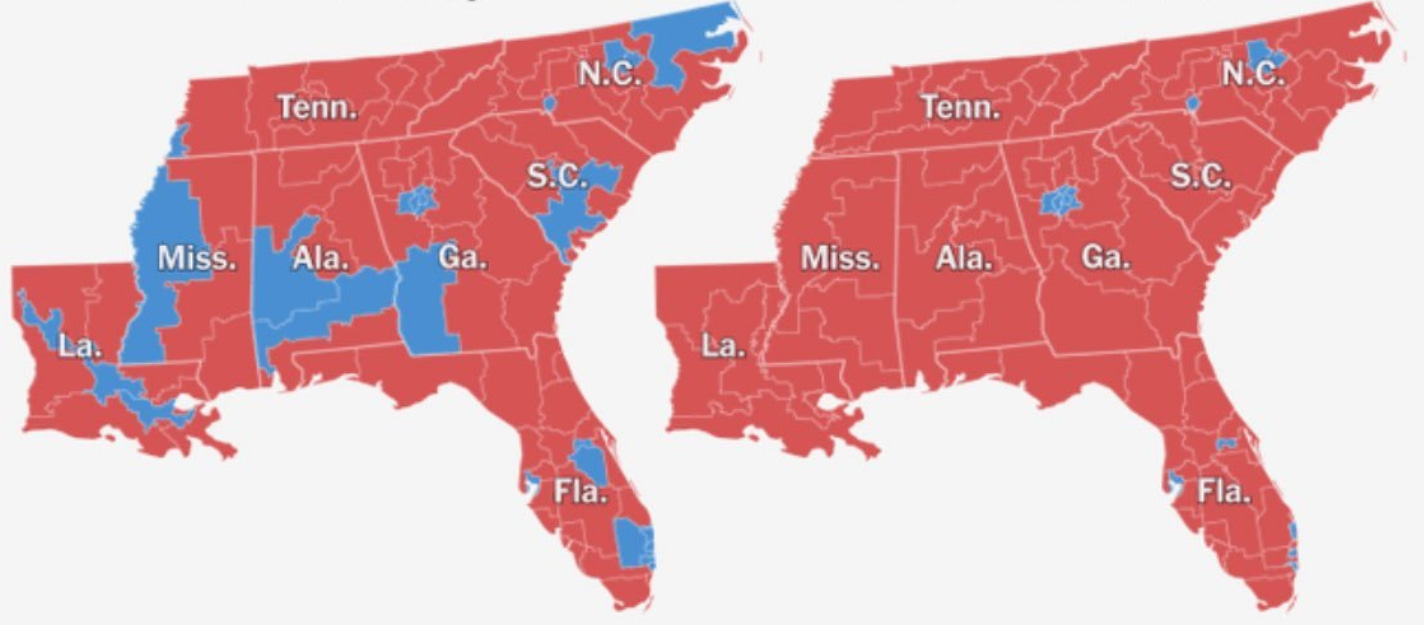
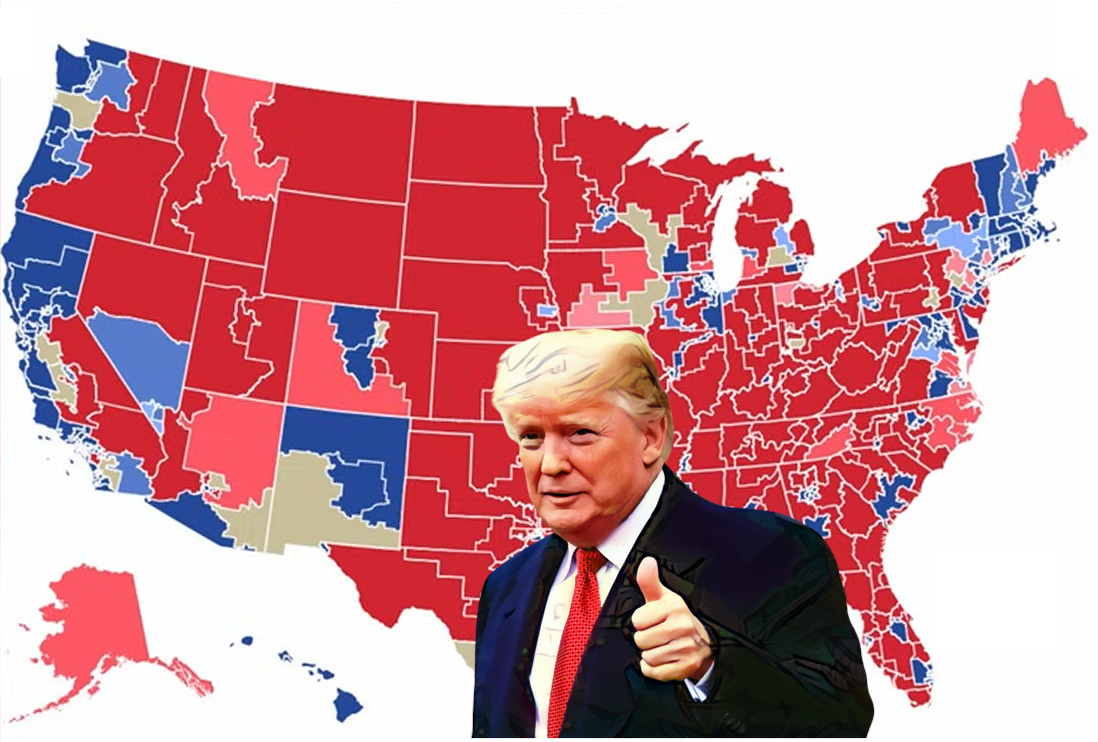
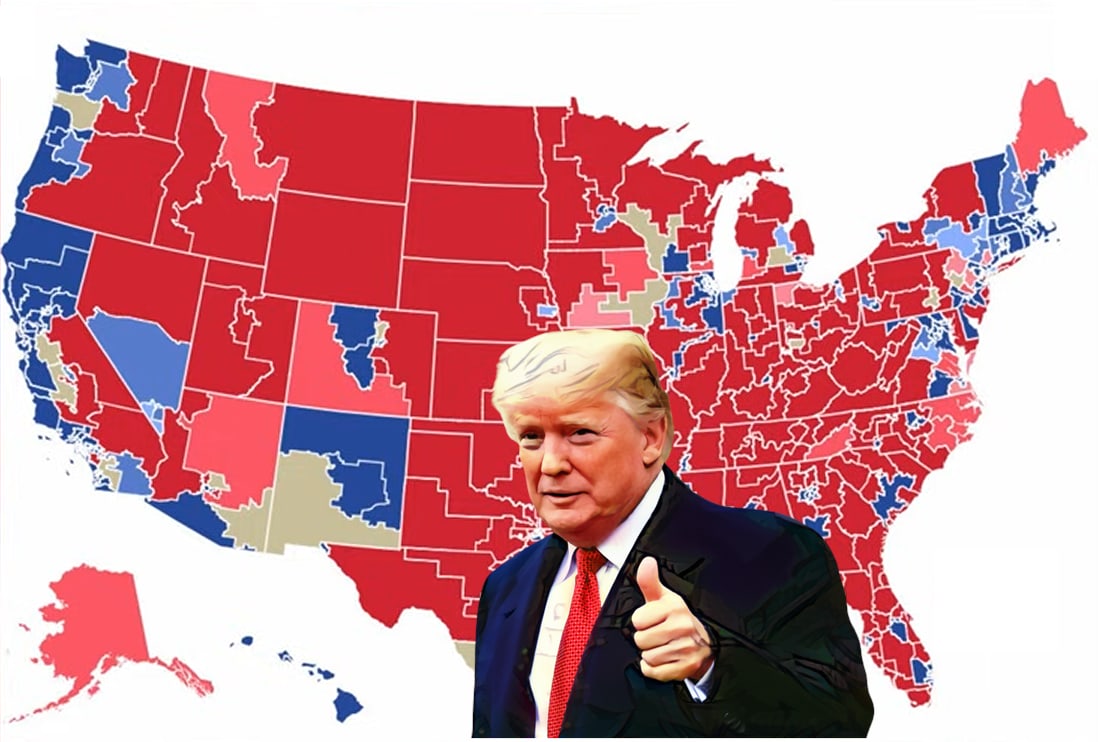
Several Republican-led states have already enacted or are finalizing new congressional maps that will result in a net gain of at least 13 solid GOP seats. Here’s the breakdown:
-
Texas: +5 GOP seats
-
North Carolina: +1
-
Missouri: +1
-
Indiana: +2
-
Ohio: +2
-
Florida: +3 to 5 (conservatively estimated at 4)
These gains are not theoretical; they’re on the books or close to final. According to the Cook Political Report (factoring in these maps and vulnerable Democrat seats in California), Republicans already begin the 2026 cycle with 213 lean or solid GOP seats. That’s just five short of the 218 needed for a majority.
Once the additional seats from Florida, Indiana, and Ohio are included, the GOP’s total rises to 221 (one more than they currently hold). And that’s without flipping a single contested district.
In effect, if these maps hold, Republicans will have already secured the House majority before a single vote is cast.
Democrats Attempt a Counterplay in Virginia
In a sign of growing panic, Virginia Democrats have announced plans to redraw their state’s maps to squeeze out four new Democrat-friendly seats. If successful, this could drop the GOP back to 217 seats, just shy of a majority.
But their timeline is nearly impossible. Virginia’s redistricting process requires two separate legislative approvals and then a statewide referendum; all of which must happen before midterm campaigns begin in just a few months.
With the calendar working against them, even Democrat-friendly outlets admit that pulling this off in time is unlikely.
Even in the Worst Case, GOP Is Still Poised to Win
If Democrats somehow succeed in Virginia and recapture California seats, the GOP would be left with 217 solid seats, still just one seat away from the majority. With 19 competitive races expected nationwide, winning even one would hand Republicans the House.
This is why the second “R” matters even more.
Voter Registration: The Quiet Red Wave
In addition to redistricting, voter registration trends across the country are painting a dire picture for Democrats.
In the 30 states that track voter registration by party, Democrats are experiencing steep and sustained losses, while Republicans continue to surge.
Pennsylvania: A Blue Firewall Crumbles
In Pennsylvania, the media suggested Democrats were regaining ground. However, a full analysis of all 67 counties shows the apparent gains were the result of routine maintenance, not new registrations.
In fact, strongholds like Philadelphia and Allegheny counties are turning redder. And the two bellwether counties (Erie and Northampton) are moving toward the GOP. As one analyst put it, “He who wins Erie and Northampton wins Pennsylvania.”
Since the 2024 election, Democrats have lost over 40% of their registration advantage in the Keystone State. Pennsylvania historically votes to the right of its registration numbers. With that cushion now gone, Democrats face an uphill climb to win the state again in any presidential race.
North Carolina Nears a Historic Shift
In North Carolina, Republicans are now just 2,000 voter registrations away from flipping the state to a Republican majority for the first time ever.
Though North Carolina has long voted Republican, its rolls remained majority Democrat due to older conservative voters never changing their official affiliation. That is now changing rapidly as new voters register Republican and party rolls reflect actual voting behavior.
Arizona, Colorado, and Florida Show GOP Momentum
In Arizona, both parties purged inactive voters; however, Democrats lost far more. Republicans have expanded their registration lead, and that gap continues to grow.
Even in deep-blue Colorado, Republicans posted a net gain of 6,000 new voters (a sign that erosion is happening even in strong Democrat states).
Florida delivered the most dramatic result. The state added 5,000 new Republican registrations, while Democrats lost 5,000; a net shift of 10,000 voters toward the GOP. This pattern is not isolated, as it reflects a broader national trend of Democrat attrition and Republican growth.
2026 Is the GOP’s Opportunity But Not a Guarantee
These redistricting and registration trends represent the most favorable pre-election conditions Republicans have had in years. But none of this guarantees victory.
Midterms can turn on a wide range of factors: candidate quality, turnout, funding, and local messaging. Republicans cannot afford to take their foot off the gas. Complacency could erase these gains.
But if the early indicators hold (the RMG polling, voter enthusiasm, and structural advantages) then the GOP is not just within reach of holding the House. They are on track to expand their majority, set the tone for 2028, and deal a serious blow to Democratic control.
the Conservative TAKE: The Path Is Clear… It’s About Execution
All the fundamentals (polling, approval ratings, district maps, and voter registration) are now leaning in favor of the GOP. The corporate media won’t talk about it, but it’s happening; and unless Democrats pull off a miracle in the next few months, Republicans have already built a winning hand.
But winning elections takes more than momentum; it takes follow-through.
Now is the time to organize, volunteer, fundraise, and register more voters. The Left is hoping Republicans sit back. If they don’t, and this trajectory continues, 2026 could be the political earthquake that resets the balance of power in Washington for a generation.